
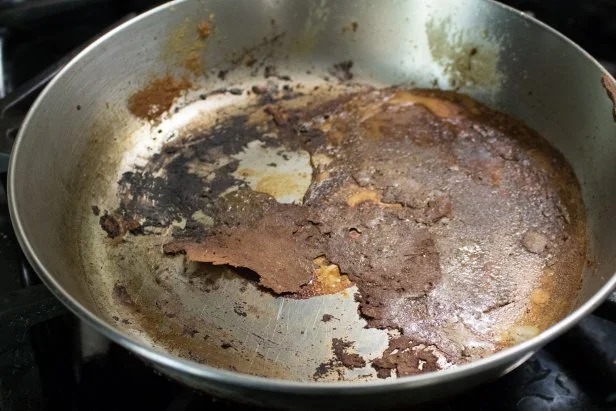
Burnt pan marks don’t automatically require aggressive scraping. Most stuck food and dark residue become easier to remove after soaking or gentle loosening. The key is matching the cleaning method to the cookware material so you remove the burned layer without scratching coatings, dulling finishes, or damaging the pan.
Let the Pan Cool Before Cleaning
Don’t rush a scorching-hot pan to the sink unless the manufacturer specifically says the cookware can handle rapid temperature changes. Sudden cooling may damage or warp some pans.
Cookware often appears alongside kitchen concepts in home layout ideas, yet material differences matter more during cleaning than appearance. Stainless steel, cast iron, aluminum, enamel, and nonstick surfaces require different care.
Remove Loose Food First
Once the pan is safe to handle, empty loose debris and gently lift anything that separates easily with an appropriate nonmetal utensil.
Avoid forcing hardened residue immediately. Softening it first usually reduces the amount of physical pressure needed later.
Soak Stuck Residue When the Material Allows
For cookware suitable for soaking, warm water and a small amount of dishwashing liquid can loosen baked-on food. Give the residue time to absorb moisture before wiping with a non-scratch sponge.
Kitchen-maintenance discussions in home furnishing features may emphasize tidy surfaces, but protecting cookware finishes is part of keeping a kitchen looking good. Don’t use steel wool unless the cookware maker specifically permits it.
| Cookware Type | Main Risk | Cleaning Priority |
|---|---|---|
| Nonstick | Coating scratches | Soft tools |
| Stainless steel | Surface marks | Gentle loosening |
| Cast iron | Seasoning loss | Material-specific care |
| Enamel | Chipping | Avoid hard impact |
Loosen Burnt Food Gradually
If ordinary soaking isn’t enough, follow the cookware manufacturer’s recommended method for stubborn residue. Repeating a mild cleaning cycle may take longer, but it can be safer than attacking the surface with a knife or metal scraper.
General kitchen care inspiration can provide broader housekeeping ideas, while the pan’s manufacturer remains the best guide for material-specific restrictions. This matters especially for coated and specialty cookware.
Check the Outside of the Pan Separately
Burn marks on the exterior may be caused by spilled food, grease, or direct flame contact. Treat the outside independently because it may have a different finish from the cooking surface.
Keep cleaners away from handles, painted areas, and decorative finishes unless the product instructions indicate compatibility.
Know When a Mark Is Permanent
Some discoloration isn’t loose burnt food. Heat can change the appearance of metal, and older pans may retain staining even after all residue has been removed.
If the cooking surface feels smooth and clean but remains discolored, further scrubbing may only damage the finish without changing its appearance.
Where Aggressive Cleaning Backfires
Knives, screwdrivers, rough scouring tools, and excessive force can turn a cosmetic cooking accident into permanent surface damage. Nonstick coatings are particularly unsuitable for hard scraping.
Mixing strong cleaning chemicals is another unnecessary risk. Use one compatible method at a time, rinse thoroughly, and stop if the cookware surface begins peeling, chipping, or behaving differently from its normal condition.
Frequently Asked Questions
Can I save a badly burnt pan?
Often, yes, if the cookware itself hasn’t warped, cracked, chipped, or suffered coating failure. Stubborn residue may need several gentle cleaning rounds.
Why shouldn’t I scrape burnt food with a knife?
Metal blades can scratch cookware, damage coatings, or slip while pressure is being applied. A soaking period followed by an appropriate non-scratch tool is generally safer.
Is pan discoloration the same as burnt residue?
No. Burned food usually has texture or buildup, while heat discoloration can remain even when the surface is clean and smooth.
Clean the Pan Without Ruining It
Patience usually protects cookware better than force. Let the pan cool, soften stuck residue, use tools appropriate for its surface, and repeat gentle cleaning when necessary. If only discoloration remains after the surface feels clean, more scraping may create damage without improving the pan.