Oversized furniture can dominate a room, but replacing an expensive sofa, sectional, table, or bed isn’t always necessary. The better approach is often to adjust everything around the large piece so its scale feels deliberate rather than accidental.
Balance depends on spacing, visual weight, and proportion—not making every object equally large.
Give the Largest Piece Breathing Room
Crowding smaller furniture tightly around an oversized sofa or bed exaggerates its bulk. Open space around the main piece helps define it as an intentional anchor.
Many furniture arrangement ideas demonstrate this effect. Even moving a side table several inches away or removing one unnecessary chair can restore visual balance.
Avoid placing every furniture edge directly against another.
Reduce Competing Visual Weight
A large sofa paired with a massive coffee table, heavy entertainment unit, and oversized lamps can make the whole room feel packed. Supporting furniture should usually be lighter in appearance.
Choose slimmer tables, open-leg designs, smaller lamps, or furniture with visible floor beneath it. The goal isn’t to make everything tiny; it’s to prevent several heavy objects from competing.
| Large Piece | Helpful Companion | Less Helpful Choice |
|---|---|---|
| Sectional | Slim side tables | Bulky end tables |
| Large bed | Narrow nightstands | Wide cabinets |
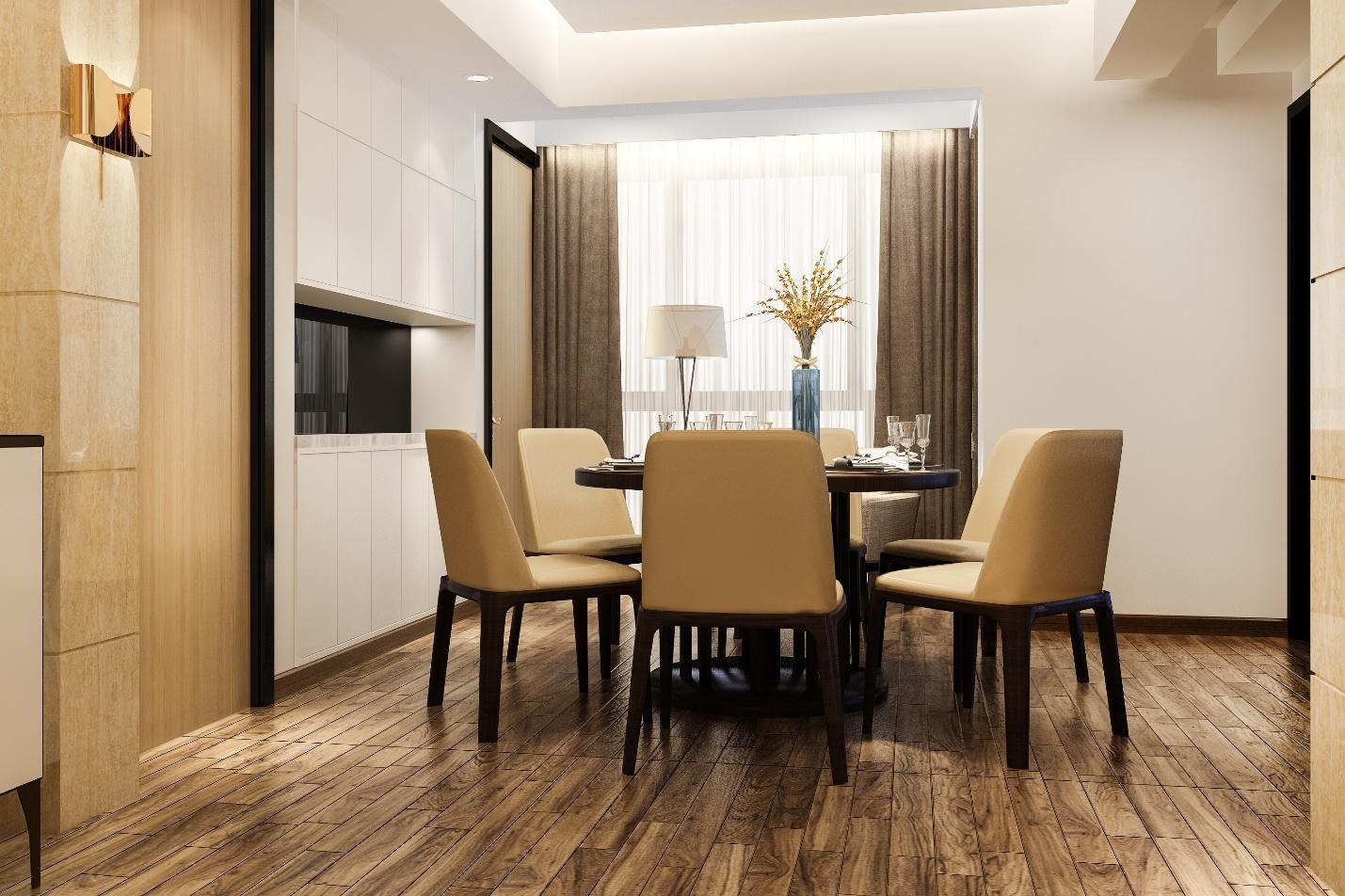
| Dining table | Light chairs | Heavy armchairs |
| Big sofa | Open-leg table | Solid block table |
Use Rugs to Define Proportion
A rug that’s too small can make oversized furniture look even larger. A more generous rug visually connects the large piece with the rest of the seating or sleeping zone.
Bedrooms are especially sensitive to this relationship. Studying bedroom layout references can help show why larger beds often look more balanced when rugs, lighting, and surrounding furniture are scaled intentionally.
A larger rug doesn’t necessarily make the room feel smaller.
Keep Some Floor Visible
The rug should unify the furniture without swallowing every inch of floor. Visible flooring around the perimeter provides contrast and stops the room from appearing fully occupied.
Balance is about boundaries.
Shift Attention With Vertical Elements
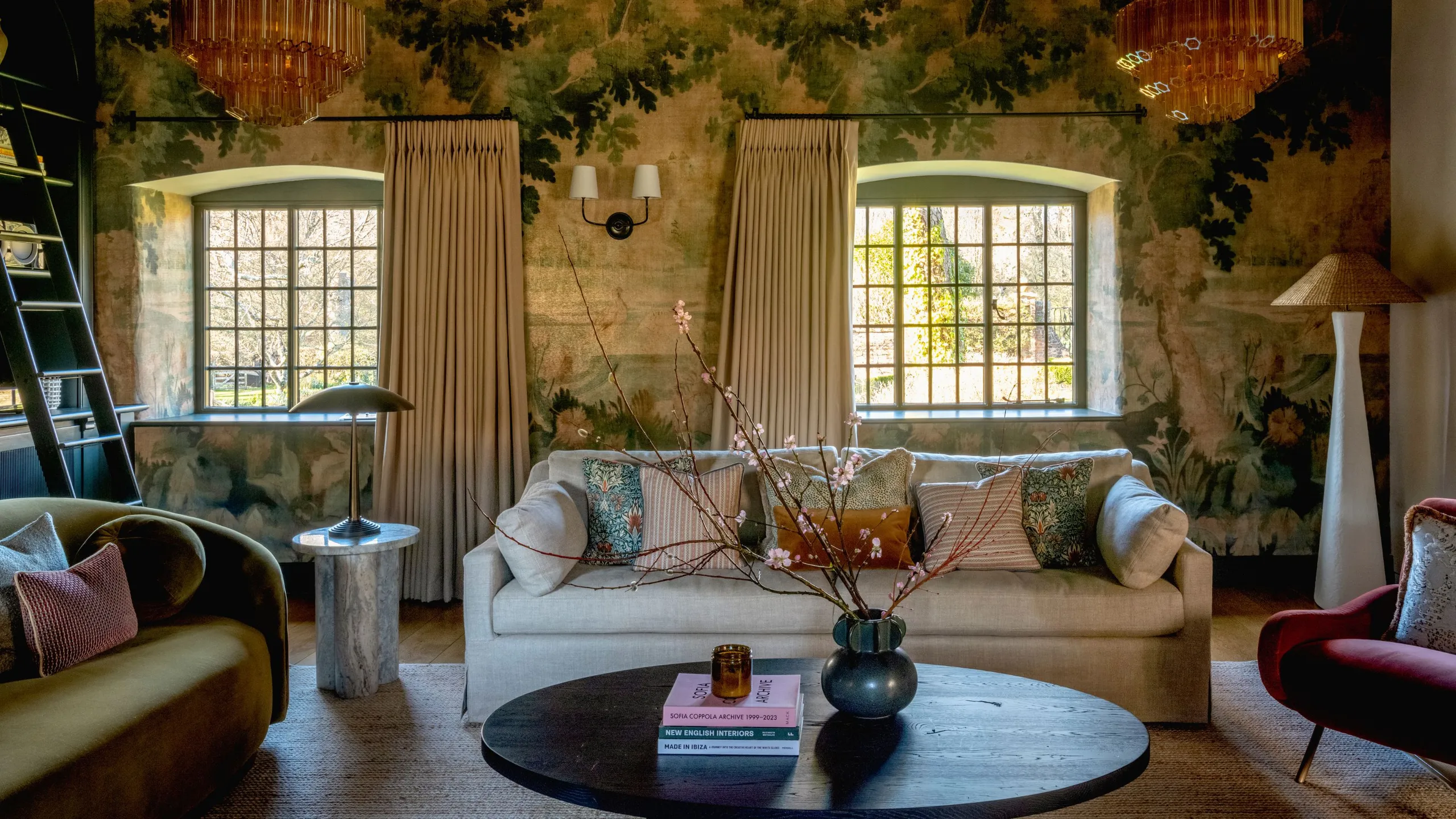
If most visual weight sits low in the room, add height elsewhere. Tall curtains, vertical artwork, a floor lamp, or a narrow bookcase can distribute attention upward.
Outdoor environments use this same balancing principle. In many garden and pool layouts, large horizontal surfaces are balanced with upright planting, structures, or architectural details.
Indoors, vertical features keep the eye from focusing entirely on bulky furniture.
Simplify Accessories Around Large Pieces
An oversized sectional covered with twelve cushions can appear far bigger than the same sectional with four carefully chosen ones. Decorative abundance increases perceived mass.
Reduce small accessories near the largest furniture. One larger artwork may also work better than a crowded gallery wall directly behind a bulky sofa.
Use Color to Soften the Outline
Furniture with strong contrast against the wall stands out more. If a dark sofa feels enormous against a bright white wall, repeating darker tones nearby can reduce the abrupt contrast.
You don’t need exact color matching. The aim is visual integration.
Common Attempts That Make the Problem Worse
Pushing oversized furniture firmly against every wall may seem like the easiest way to create floor space, but it can make the room feel rigid and emphasize the piece’s dimensions.
Adding many tiny accessories is another weak solution. Small objects don’t automatically balance one large object; they may create visual clutter around it.
Instead, use fewer supporting pieces with enough scale to feel intentional without becoming bulky themselves.
Frequently Asked Questions
Can a sofa be too large for a living room?
Yes. If it blocks pathways, doors, storage, or comfortable movement, its physical size may be impractical regardless of styling.
Should large furniture always touch the wall?
No. Even a small amount of space behind furniture can make an arrangement feel less cramped when the room allows it.
What rug size works with oversized furniture?
Choose a rug large enough to visually connect the main furniture grouping. In seating areas, having at least the front furniture legs on the rug often creates better unity.
Balance What You Already Own
Oversized furniture doesn’t automatically mean a poorly designed room. Often the surrounding arrangement is what makes the piece feel overwhelming.
Create breathing room, reduce competing bulk, use rugs to connect the layout, and bring some visual height into the space. Before spending money on replacements, remove one unnecessary object and rearrange what remains. Better proportion can sometimes solve what initially looks like a furniture-size problem.