
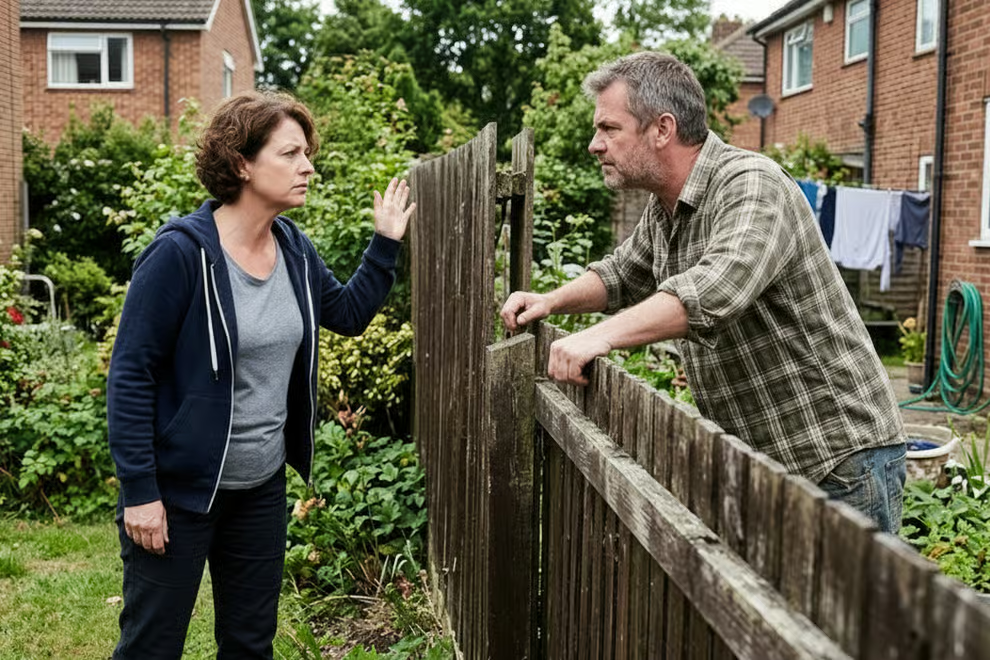
Before replacing a disputed fence, establish what evidence supports the line you intend to use. Boundary dispute solicitors in Cardiff can investigate the legal position and help you compare a negotiated solution with contested proceedings. Starting with construction rather than advice risks turning a disagreement about centimetres into a much larger argument.
These five Cardiff practices expressly publish boundary-dispute services. The numbering organises the choices rather than ranking results, fees or quality. Ask who would handle your matter and what the first instruction would cover.
1. Darwin Gray
Darwin Gray’s property-disputes page describes reviewing title deeds and plans, instructing surveyors where necessary and pursuing negotiation or court proceedings. Its Cardiff office is on Cathedral Road. That published approach makes it a relevant enquiry when you need the documents and physical evidence considered together. Ask whether its first report would identify what remains uncertain, not merely restate each neighbour’s position. According to the firm, its team also handles rights over land, which matters if the disagreement involves access as well as ownership. [web:88]
2. Berry Smith
Berry Smith lists boundary disputes alongside adverse possession, trespass, covenants and rights of way within its Cardiff property-litigation work. Consider it when the contested strip is only part of the problem. Say, for example, your neighbour accepts your ownership but claims a right to cross the land. The location of the boundary would not answer that separate question. Describe both issues in your opening enquiry so the practice can scope the relevant work rather than investigating the fence in isolation. [web:89]
3. JCP Solicitors
JCP’s boundary service includes boundary agreements, disputed-boundary claims and applications concerning title deeds. The firm lists Cardiff among its South Wales offices and also describes telephone and video meetings. That makes it worth contacting if you want to understand the possible end document before arguments become entrenched. Ask what an agreement would need to record and whether further evidence is required first. A conversation that ends with an agreed position needs a different scope from an instruction to contest the register. [web:90]
4. Robertsons Solicitors
Robertsons publishes a Cardiff neighbour-disputes service covering boundaries, rights of way, trees, nuisance and related issues. Its Park Place office lists direct negotiation, mediation and other dispute-resolution routes. This may suit an owner whose priority is to retain a workable relationship next door. Explain what practical arrangement you could accept, as well as what you believe you own. The firm’s page describes mediation as one option; ask how it would prepare your evidence before proposing discussions with the neighbour. [web:94]
5. Harding Evans
Harding Evans lists commercial and residential boundary disputes within its property-dispute service and identifies a Cardiff office in Whitchurch. Its published work also includes co-ownership and easements. Consider an enquiry if the property arrangement involves several owners or a business premises rather than a straightforward garden boundary. Ask which individuals the firm would represent and who needs to authorise the instruction. A shared property can produce different objectives among its owners before negotiations with the neighbour have even started. [web:96]
Spend the first appointment on the uncertainty
Treat the evidence like overlapping map layers. Old deeds, photographs and the current fence may each answer a different question; ask the solicitor which material bears on the disputed legal position. Bring a chronology that distinguishes what you personally saw from what someone later told you.
If your background reading includes Trial Policies, keep it separate from the property records. An article about another dispute cannot establish what happened on your land. A research bookmark to Lawful Logs belongs outside the evidence chronology for the same reason.
Use Liability Focus as a separate reading reference rather than attaching it to a statement about the neighbour’s conduct. Material collected under Jury Stories should likewise remain distinct from dated photographs and correspondence. The supplied links do not substantiate this shortlist.
A useful first-stage spending rule is to identify the question you are paying to answer. It might be whether a surveyor is needed or whether negotiations are sensible. Request an estimate for that stage before authorising a broader dispute.
Questions owners ask before instructing
Should I commission a surveyor myself?
Discuss the proposed instruction with the solicitor first. Darwin Gray expressly describes instructing surveyors where needed. Ask what question the expert should investigate so that the report addresses the legal disagreement rather than merely measuring the existing fence. [web:88]
Can an agreement be the objective from the start?
Yes. Tell the adviser you want to investigate an agreed solution. JCP specifically publishes advice on creating boundary agreements, although the appropriate terms depend on the property and evidence. [web:90]
What should my first email contain?
Give the address, the disputed feature, the main dates and any immediate proposed work. Attach the key correspondence and ask how the practice wants to receive larger plans or photographs.
Get a staged proposal before escalating
Send two practices the same concise description and request a price for an initial assessment. Compare the question each proposes to answer, the evidence required and any surveyor involvement. Choose a scope that helps you decide the next move before committing to a wider argument.