Layering gives an outfit depth, texture, and flexibility, but too many competing lengths or bulky pieces can quickly make the result look messy. Cleaner layered outfits depend on hierarchy. One layer should lead visually while the others support it through controlled volume, deliberate lengths, and a limited mix of textures.
Start With the Layer Closest to Your Body
Good layering begins with a base that doesn’t create unnecessary bulk. Thin tees, fitted knits, lightweight shirts, and simple dresses give outer layers room to sit properly.
Looking at different layering references can help you notice that successful outfits usually have a clear order rather than several pieces fighting for equal attention.
Keep the Base Relatively Simple
A patterned shirt under a textured cardigan, scarf, vest, and statement coat can become visually crowded. If the outer layers already have personality, use a quieter foundation.
This doesn’t mean everything must be plain. It means deciding where you want the eye to land.
Control the Lengths Between Layers
Visible layers work best when their lengths appear deliberate. A shirt hem extending slightly below a sweater can add depth, but several uneven hems may make the outfit look accidental.
Reviewing closet organization ideas can also help when grouping garments by length, weight, and purpose so compatible layering pieces are easier to find.
| Layering Problem | Likely Cause | Cleaner Fix |
|---|---|---|
| Bulky torso | Too many thick layers | Reduce fabric weight |
| Random hems | Competing lengths | Create clear progression |
| Busy appearance | Too many textures | Simplify one layer |
| Hidden shape | Excess overall volume | Define one area |
Balance Volume Across the Outfit
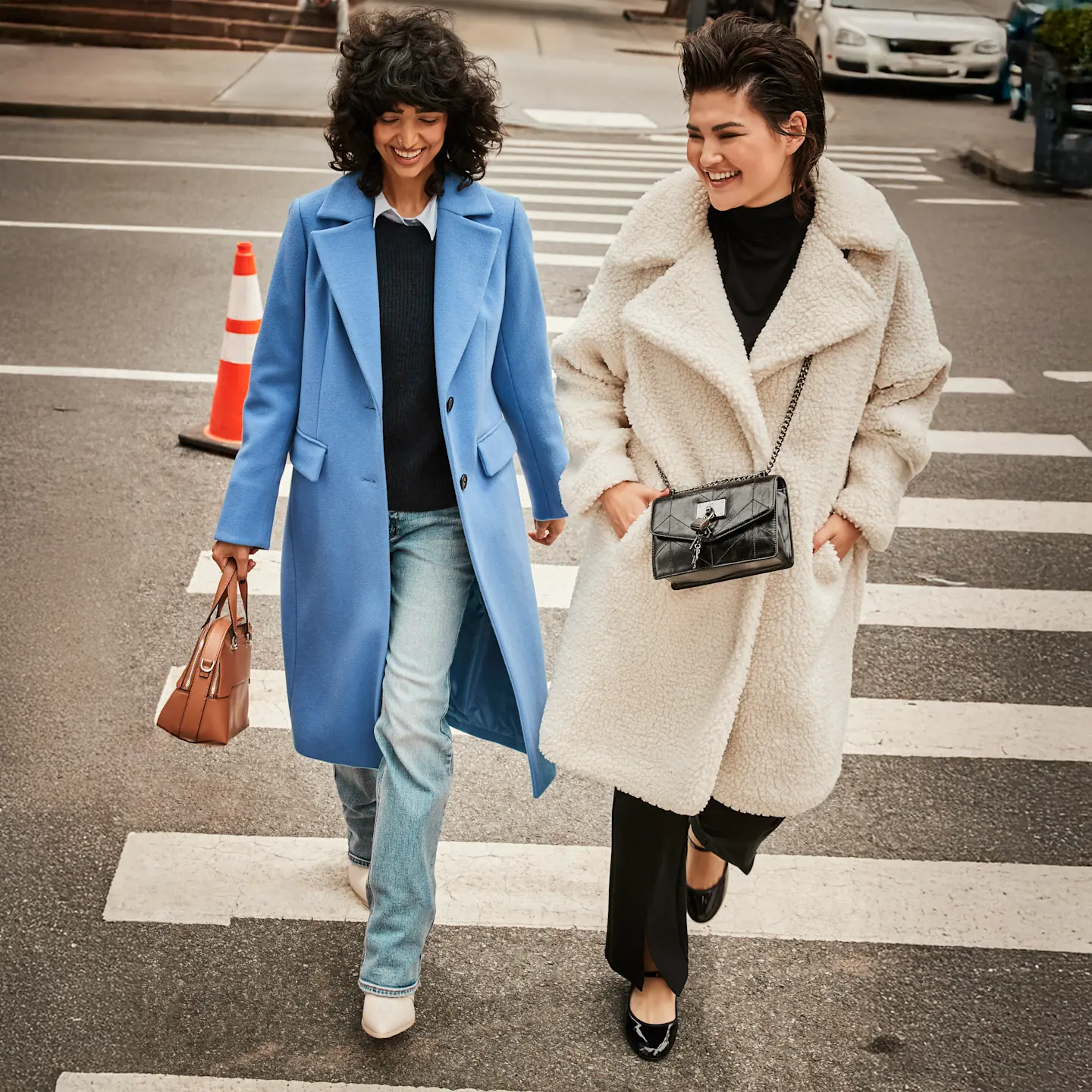
If your upper body has several layers, your lower half usually benefits from cleaner lines. Straight jeans, slim trousers, or a simple skirt can keep the outfit grounded.
With a long, narrow coat, you have more freedom to add volume underneath because the outer silhouette creates a clear boundary.
Browsing wardrobe styling inspiration can be helpful for seeing how different proportions interact, especially when long outerwear or oversized knitwear is involved.
Limit Competing Textures and Patterns
Layering already adds visual information. Mixing chunky wool, shiny fabric, distressed denim, bold checks, and a patterned scarf can overload a relatively small outfit.
Repeat One Detail Instead
A cleaner approach is to repeat a color, fabric tone, or shape somewhere else in the outfit. Brown boots might connect with a brown belt, while a soft gray shirt can echo the undertone of a coat.
Repetition creates cohesion without requiring an exact matching set.
Why More Layers Don’t Always Mean Better Style
One common mistake is keeping every layer visible simply because it was intentionally selected. Sometimes the strongest outfit comes from removing one piece.
Bulk can also interfere with fit. A jacket that looks excellent over a T-shirt may pull badly over a thick hoodie. Layering requires enough physical room between garments, not only attractive color combinations.
And don’t overlook movement. If you can’t comfortably sit, bend your arms, or close your coat, the layered look isn’t functioning well.
Frequently Asked Questions
How many layers should an outfit have?
There is no required number, but two or three visible clothing layers are usually enough for everyday outfits. More can work when the fabrics are thin and the overall silhouette stays controlled.
Can oversized pieces be layered together?
Yes, although proportion becomes more important. Combining several oversized garments works best when their lengths differ clearly and at least one part of the outfit provides a cleaner line.
Should every layer be a different color?
No. Similar shades can create a cleaner, more cohesive outfit. Tonal layering is especially useful when you want texture and depth without introducing several competing colors.
Remove Clutter Before Adding Anything Else
If a layered outfit feels messy, test the simplest fix first: remove one piece. Then check the remaining lengths, volume, and texture. Strong layering isn’t about showing how many garments you can combine. It’s about making each visible layer earn its place in the final shape.