
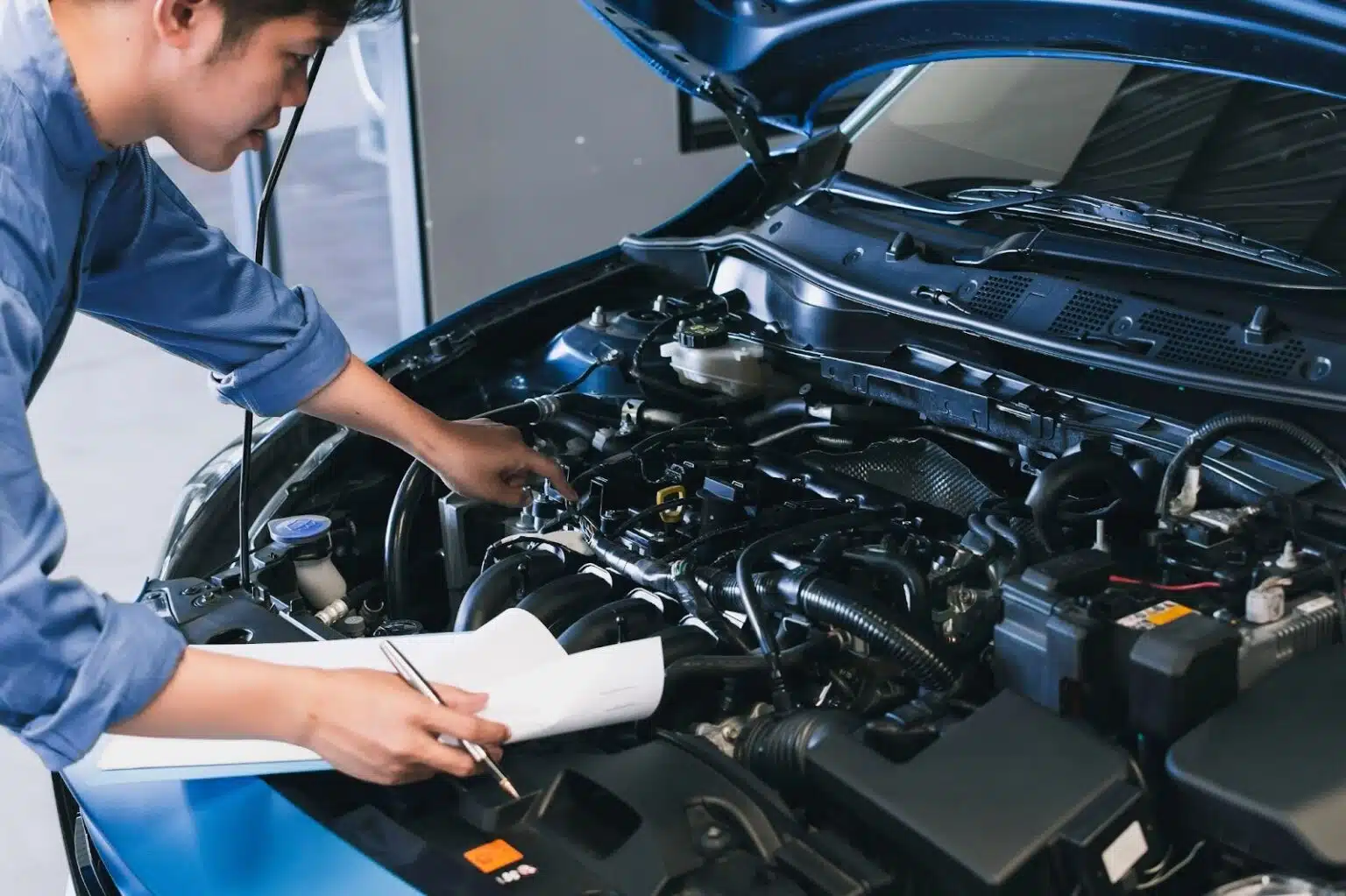
Transmission overheating can weaken fluid performance, reduce lubrication, and place extra stress on internal seals, clutches, and other components. Heat may build because of low fluid, restricted cooling, heavy towing, excessive slipping, airflow problems, or an internal transmission fault. The goal isn’t merely to cool the unit temporarily but to identify why temperature keeps rising.
Understand Where the Heat Comes From
Automatic transmissions naturally generate heat through hydraulic operation and friction. Their cooling system must remove enough of that heat to keep operating conditions under control.
Low fluid can reduce both lubrication and the amount of fluid available to carry heat away. Readers exploring vehicle maintenance schedules may encounter cooling-system checks alongside drivetrain service because several vehicle systems can influence transmission temperature.
Heavy Load Can Expose Weak Cooling
Towing, steep grades, slow traffic, hot weather, and repeated acceleration can increase transmission workload. A cooling system that seems adequate during easy driving may struggle under those conditions.
That doesn’t mean overheating during towing should automatically be considered normal. Vehicle load limits, fluid condition, cooling-system performance, and transmission health still need evaluation.
Inspect the Transmission Cooling Circuit
Many automatic transmissions send fluid through a heat exchanger in the radiator or through a separate transmission cooler. Restricted flow, damaged lines, debris, poor airflow, or cooling-system problems can reduce heat removal.
General drivetrain cooling information can help owners understand the components involved, but hands-on diagnosis may require temperature readings and checks for proper fluid circulation.
| Condition | Possible Heat Source | Useful Response |
|---|---|---|
| Low fluid | Leak or insufficient fill | Find leak and correct level |
| Heavy towing | High transmission load | Verify capacity and cooling |
| Restricted cooler | Reduced heat transfer | Inspect lines and cooler |
| Slipping | Internal friction | Diagnose transmission fault |
Treat Slipping as a Heat Problem Too
A slipping clutch pack or torque-converter problem can convert more engine power into unwanted heat. If overheating appears alongside rising rpm, delayed engagement, or abnormal shifting, cooling alone may not solve the problem.
Owners browsing car care references may learn the basic relationship between heat and drivetrain wear, but repeated overheating combined with shift problems calls for direct testing. Installing a larger cooler cannot repair worn internal friction components.
Check the engine cooling system as well. On vehicles using a radiator-integrated transmission cooler, engine temperature and radiator performance can influence overall heat transfer.
Where Quick Fixes Can Fail
Adding fluid whenever the transmission gets hot can be harmful if the level is already correct. Overfilling can create its own operating problems, while using an incorrect fluid can affect shift behavior and lubrication.
Another weak approach is repeatedly clearing a temperature warning and continuing the same driving pattern without investigating the cause. If overheating keeps returning, the problem may involve cooling capacity, leakage, restricted flow, excessive load, or internal friction that needs diagnosis.
Frequently Asked Questions
Can low transmission fluid cause overheating?
Yes. Insufficient fluid can reduce lubrication and heat-transfer capacity. Because low fluid often points to leakage, the source should be identified rather than repeatedly topping up the transmission.
Can a clogged transmission cooler cause high temperature?
Restricted cooler or line flow can reduce heat removal. Diagnosis may involve checking cooler condition, line routing, airflow, and temperature differences while following the manufacturer’s service procedure.
Should I drive after a transmission temperature warning?
Allowing the transmission to cool may be necessary, but repeated warnings shouldn’t be ignored. If the vehicle shifts abnormally, leaks fluid, or quickly overheats again, further driving can increase the chance of damage.
Correct the Cause of Excess Heat
Temperature is a symptom that reveals how hard the transmission and cooling system are working. Verify the fluid level and specification, inspect for leakage, confirm cooler flow and airflow, and consider whether slipping or excessive load is creating additional heat. Fixing the reason for overheating offers far more protection than repeatedly waiting for the warning to disappear.