Worn shoe soles are more than a cosmetic issue. As tread becomes shallow and rubber wears unevenly, footwear can lose some of the grip and stability it had when new. Checking the outsole regularly gives you a chance to replace or repair a pair before the bottom becomes smooth, damaged, or uncomfortable.
What Does Normal Sole Wear Look Like?
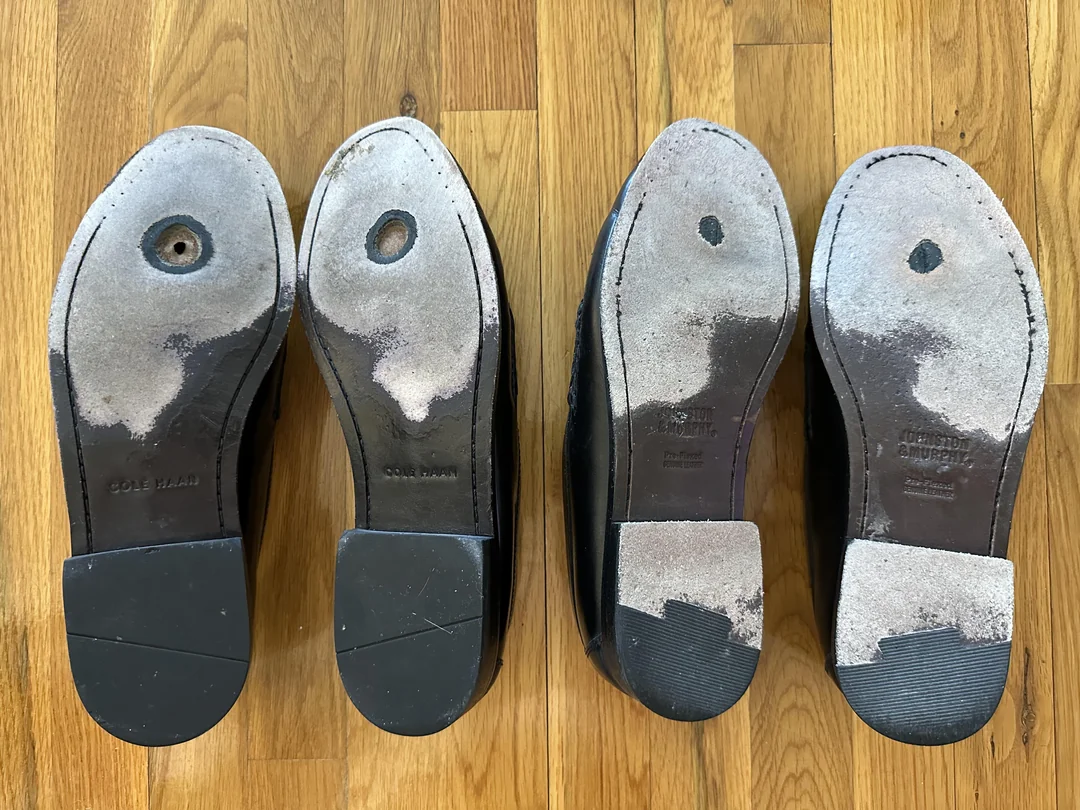
Most shoes don’t wear evenly across the entire bottom. Many people see heavier wear around the heel or forefoot because those areas receive more contact during walking.
Moderate wear isn’t automatically a reason to discard a pair. The bigger concern is progression: tread disappearing, material becoming unusually thin, or one side wearing down enough to change how the shoe sits.
Compare the Left and Right Shoes
Place both shoes on a flat surface and look at them from behind. A noticeable lean or major difference between sides can indicate uneven wear.
General clothing and lifestyle inspiration may encourage keeping favorite shoes in rotation, but appearance shouldn’t outweigh a sole that has clearly deteriorated.
Grip Depends on More Than Visible Tread
Deep tread often helps on loose or wet surfaces, but outsole material matters too. Rubber can harden with age, and a sole may become less reassuring even if some tread pattern remains.
Pay attention to how the shoes behave during ordinary use. Unexpected slipping on familiar surfaces deserves more attention than whether the bottom still looks acceptable from a distance.
| Sole Change | What It Suggests | Possible Response |
|---|---|---|
| Smooth tread | Reduced surface texture | Consider replacement |
| Uneven heel | Repeated one-sided wear | Check condition closely |
| Cracks | Material deterioration | Repair or replace |
| Thin forefoot | Heavy repeated wear | Limit further use |
Inspect Shoes Before Bad Weather
A pair that feels adequate on dry flooring may perform differently in rain. Before wetter seasons, look at the areas that contact the ground most often and check for smooth sections.
Planning outfits through seasonal wardrobe layering can include footwear condition as well. It’s easier to prepare a dependable wet-weather pair before the first slippery commute than afterward.
Don’t Forget the Midsole
The outsole is the visible bottom layer, but cushioning can deteriorate too. Shoes may begin feeling flatter or harsher even before the tread is completely gone.
Changes in comfort and stability therefore deserve attention alongside visible wear.
Repair or Replace?
Certain shoes can be resoled, especially when the upper remains in good condition and the construction makes repair worthwhile. Others are designed in a way that makes full replacement more practical.
A long-term wardrobe approach can help you decide which footwear is worth maintaining and which everyday pairs are better replaced once their working surfaces are exhausted.
Waiting Too Long Creates More Problems
People often keep worn shoes because the upper still looks good. Unfortunately, the bottom of the shoe may be doing most of the important mechanical work.
Another mistake is judging condition only by age. A lightly worn pair can remain usable for years, while heavily used shoes may wear quickly. Mileage, walking surface, body mechanics, material, and storage all influence how fast deterioration appears.
Frequently Asked Questions
How often should I check shoe soles?
A quick inspection every few weeks is sensible for shoes worn frequently. Check more often if you walk long distances, use them for work, or regularly encounter wet or rough surfaces.
Can a cobbler fix worn soles?
Sometimes. Repair depends on the shoe’s construction, material, and amount of damage. A cobbler can tell you whether resoling or replacing a worn section is practical.
Is uneven shoe wear always a problem?
Some uneven wear is common. Rapid, severe, or unusual wear deserves closer attention because it can affect how the shoe contacts the ground and may shorten its useful life.
Replace Shoes Before Traction Becomes an Issue
Don’t wait for the outsole to become completely smooth before evaluating a heavily worn pair. Look for lost tread, thinning material, cracks, uneven wear, and changes in how the shoe feels underfoot. Worn shoe soles are easier to deal with while you still have dependable alternatives available for everyday walking.