Slow reaction time in football is often a decision problem rather than a simple lack of physical speed. Players react late because they notice information late, scan too little, or wait until the situation becomes obvious. Faster drills can help, but the biggest gains often come from recognizing useful cues before everyone else does.
Separate Reaction Speed From Running Speed
A fast sprinter can still react slowly in a game. Physical speed determines how quickly you move once the decision is made, while football reaction includes noticing the situation and choosing an action.
Improvement therefore requires both perception and movement. Training only straight-line sprint speed addresses one part of the problem.
Ideas from team training content may provide additional drill variety, but reaction exercises work best when they force players to read meaningful football information.
Scan More Frequently
Players who know what is around them before receiving rarely need as much time after receiving. Quick shoulder checks can reveal opponents, teammates, open spaces, and pressure.
Scanning should happen repeatedly rather than once. The picture changes whenever players move.
General sports competition material can support broader learning, yet the most useful habit is simple: collect information before the ball demands your full attention.
Connect Scanning to Action
A scan becomes valuable when it changes the next decision. If you see a defender closing from the left, your first touch may move right before pressure arrives.
Use Drills With Unpredictable Signals
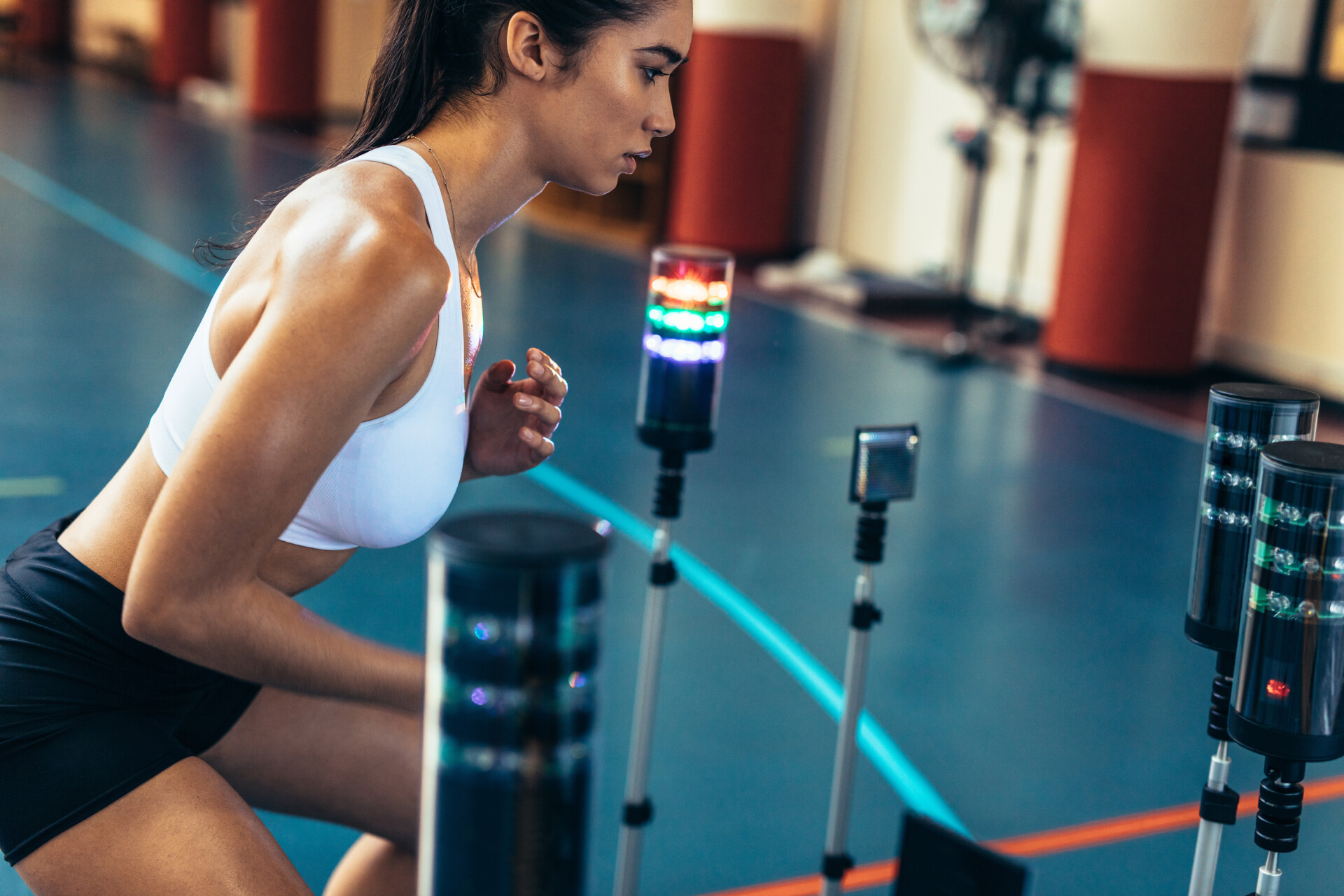
Reaction drills should include uncertainty. A coach can call a number, show a color, point toward a gate, or release a ball in an unexpected direction.
| Drill Type | Decision Demand | Training Benefit |
|---|---|---|
| Color gate | Identify target | Visual response |
| Number call | Match signal to action | Processing speed |
| 1v1 release | Read opponent | Football reaction |
| Small-sided game | Multiple changing cues | Match transfer |
Players should not know the exact action before the signal. Otherwise they are practicing a preplanned movement rather than reaction.
Studying tactical decision patterns can help players understand the cues behind pressing, covering, and passing decisions, making physical reaction drills more football-specific.
Practice Under Controlled Pressure
Adding a defender changes how quickly a player must process information. Start with passive pressure, then progress toward active opposition.
Too much pressure too early can turn a useful drill into repeated failure. Players need enough difficulty to force faster decisions without losing every technical action.
Reduce Available Time Gradually
Smaller areas, touch limits, or shorter passing windows can increase decision speed. Change one constraint at a time so you can see what actually improves.
Where Reaction Training Goes Wrong
Random light boards and quick-feet exercises can look impressive, but they do not automatically create faster football decisions. Reacting to a flashing light is different from recognizing a defender stepping forward or seeing a passing lane close.
Players also make mistakes when every drill emphasizes speed over accuracy. A fast wrong choice remains a wrong choice. Build correct recognition first, then gradually shorten the time available to respond. Decision quality should survive the increase in pace.
Frequently Asked Questions
Can reaction time be improved with practice?
Players can improve how quickly they recognize familiar situations and respond to them. Consistent drills that combine perception, decision-making, and movement are generally more useful than exercises based only on physical speed.
Do video exercises help football decision-making?
Video can help players practice recognizing positioning, movement, and tactical cues. It cannot replace live play, where timing, body movement, pressure, and physical execution occur together.
Are small-sided games good for faster reactions?
Yes. Limited space and frequent involvement create many short decision moments. Adjusting player numbers, field size, and rules can increase or reduce the difficulty.
Train Your Eyes as Well as Your Feet
Faster reactions start with earlier information. Scan often, practice unpredictable situations, add realistic pressure, and keep decision accuracy high as drills become quicker. Slow reaction time becomes easier to address once training focuses on recognizing football cues instead of simply trying to move faster.